Fall Brings Out Ill-Fated Matchups
By Paul Duggan and Dan KeatingWashington Post Staff WritersSunday, November 26, 2006; C01
There's a new map of Maryland that looks like a bad case of the measles, with 5,769 red dots splotched across the landscape.
Each one marks a spot where crews scraped a deer carcass off the highway last year.
Virginia doesn't have a red-dot plotter yet, but more than 1,000 deer collide with cars each year in Fairfax County, and more than 600 are hit on Loudoun County roadways alone.
November is peak mating time for the region's overabundant deer. Bucks chasing does in heat and does playing hard to get don't look both ways before crossing the street. Which is a big reason so many of them end up as roadside carcasses in the fall.
As deer continue to thrive in Washington's suburbs, bedding down in small woods near subdivisions, feeding on shrubs and gardens, thousands of them turn up dead each year along thoroughfares, killed by vehicles. Most collisions occur during the rutting season, late October to early December. Experts hope to identify "hot spots" where they can try to ease the problem.
A familiar story this time of year -- man and nature colliding in suburban traffic.
The deer came bolting out of the darkness "like an apparition," Michelle Marcotte said.
"It was a big one, too, with antlers and everything."
She and her husband, Kenneth Vick, were in their Chrysler PT Cruiser on Nov. 12, headed home from an evening church service in Prince George's County. Vick, 64, was at the wheel when the buck slammed into his door.
"It's pitch-black out; it's raining," said Marcotte, 52. They were in the county's Glendale area, driving about 35 mph. For an instant, the deer "was right up against the window -- eye to eye with my husband." Then came "a giant, crashing, rumbling, awful sound," Marcotte said. "I was very frazzled. I mean, you hit something that large, you could get killed."
For motorists, the crashes can be expensive and dangerous -- even deadly.
"The driver's-side door is smashed and can't be opened," Marcotte said. "The fender has a big dent in it, with paint scratched off. The headlight is hanging out. And then the antlers smashed the hood. . . . I mean, that's an awful lot of damage for one deer."
As for the buck, "it ran off, I guess. We didn't see it."
The damage: $3,370.
No one can say for sure how many deer-vehicle crashes occur each year. The deer often limp away, and police are rarely called.
There are at least as many deer in the Washington area now as in Colonial times, maybe more, experts think. Some rural counties have allowed increased hunting to cull the deer population. Officials in more populated areas sometimes use police or civilian sharpshooters to thin the herds.
Centuries ago, deer in the region had an array of predators to worry about, including "timber wolves, mountain lions and other animals that have basically been eradicated in the East," said James Parkhurst, a wildlife specialist at Virginia Tech. Hunters used to roam the forests year-round. These days, though, a lot of deer enjoy a cushy suburban lifestyle.
"You really can't find a habitat that is much better at providing the essential needs they're looking for," Parkhurst said. There's plenty to munch on: lawns and bushes, flowers and vegetables. And deer are not likely to be shot at in, say, Chevy Chase.
"We've basically given them a predator-free environment filled with resources," Parkhurst said.
But they simply refuse to obey pedestrian rules.
Especially in November.
"All eyes and all attention of the buck are devoted to the doe," Parkhurst said. "In the peak of the rut, the hormones are really dictating behavior. And so once they get fixated on following that doe, they really put blinders on."
As for females, they sometimes play hard to get, because it ensures they're not going to get jumped by a less dominant buck. "They want the most dominant, most genetically fit individual, to assure they'll have a successful breeding," he said. So if a doe doesn't like what she sees, there's a good chance she will run.
It's hard to run far in the suburbs without crossing a road. To make matters worse, deer are most active early mornings and early evenings. Their rush hours coincide with motorists', resulting in increased business for auto-body shops.
The Insurance Institute for Highway Safety estimates that 1.5 million deer-vehicle collisions occurred in the country last year, causing $1.1 billion in damage, an average of about $735 per crash. State Farm Insurance Co. said it handled 192,877 such claims in the year ending June 30. The average cost per crash: $2,800. On the company's list of states with the most claims, Virginia ranked sixth.
"I've seen them a lot more than $2,800," said Ron Reece, manager of R.S. Collision Center in Manassas. "I've seen vehicles totaled." At Finn Auto Body in Woodbridge, manager Andrea Mason said: "The worst job we had was a few years back, where it almost killed the lady. The deer went right through the windshield and was kicking right into her chest."
Nationwide, at least 180 motorists died last year (and 204 in 2004) in collisions with animals, mostly deer, up from 101 in 1993, according to a U.S. Transportation Department study. On Oct. 10 in Carroll County, Md., a motorist hit a deer, propelling it into the air. It landed on a van, which went out of control and crashed, killing the 37-year-old man who was driving.
A regional task force has been studying what to do about collisions. The group has discussed wildlife road underpasses with fencing to guide animals through and motion sensors with lights that would flash to warn drivers when the animals get too close to thoroughfares.
In Fairfax, to warn drivers about deer bolting across roads, police have been using large, mobile signs, hoping they will get more attention than smaller, permanent deer-crossing signs, which motorists tend to ignore.
In the Harwood area of Anne Arundel County, George Donaldson left home for work the morning of Nov. 15 in his 1977 Ford F-150 pickup. As always, he watched for the deer living in the woods around his house.
"I see two up in front of me," said Donaldson, 48. He slowed to let them pass. "So I go on up, and I get about a mile from my house, and all of a sudden one shoots out of the woods. I don't even see him. And bam! It hits me."
Donaldson loves that vintage truck, with just 60,000 miles on it. He bought it in mint condition a year ago for $10,000.
The deer ran off, maybe dying, maybe just sore. Donaldson drove to work -- to Glenn Dale Auto Body, which he owns with a partner -- and checked the damage.
"It needs a bumper," he said. "An outer grill shell. An inner grill shell. Headlights. Parking lights. Left front fender needs to be fixed. Moldings need to be replaced. It's roughly a $2,000 job. And we already have two others here."
Including the PT Cruiser.
"I've been driving since I was 16," Donaldson said. "I've never hit a deer before. Because I'm always watching. But there it came."
Sunday, November 26, 2006


Tuesday, November 14, 2006
Crossbow hunting winning converts
By Bill Cochran
It was just minutes until quitting time, when Penn Riggs would have to climb out of his treestand and call it a day. That’s when things started happening fast.
“I heard branches crackling in the cutover behind me,” Riggs said. Then 7-foot tall reeds begin rustling 10 feet from his perch overlooking a food plot that he had planted.
It was a buck, its head down for dinner. Riggs took aim with his crossbow.
The food plot was a project that Riggs had worked on through the summer, but when crossbow season opened, the wind was always wrong to hunt it.
Finally the back side of a front came roaring out of the west/southwest, then the wind laid just before dark. That’s when the deer appeared and Riggs sent a Spitfire broadhead through both lungs.
The buck weighed about 150 pounds, had an 8-point rack and — get this -- a stomach full of grapes.
It was the third deer of the crossbow season for Riggs, who is a project development team leader for the U.S. Coast Guard. Earlier he killed a 6-point buck, a doe and a 21-pound turkey gobbler.
“I have taken more game with the crossbow this year than I did with a compound in 28 years total,” said Riggs, who lives in Norfolk and hunts the southeastern section of the state. “In the past, my bowhunts were glorified scouting trips for gun hunting. Now I am hunting seriously with the crossbow.”
He isn’t the only one lauding crossbow hunting. While it is too early for a final count, an early look reveals that crossbow licenses are up this year from last year’s initial season, even through their price jumped $12.50 to $18.
Some hunters who watched from the sidelines or participated sparingly last year, took the plunge this time. While the movement included converts from the ranks of traditional bowhunters, that doesn’t account for all the growth. Bow license sales also have been healthy.
“I would expect crossbow deer hunting to increase a little each year for the next 2- to-5 years and then plateau at some relatively low level--at the most 5 to 10 percent of the total deer kill--maybe equal to traditional bows,” said Matt Knox, deer biologist for the Department of Game and Inland Fisheries.
Confidence is a key factor in winning new crossbow converts, Riggs believes.
“I’m thinking that the word about their accuracy and ease of use is spreading,” he said. “Lots of folks, like me, don’t have time to practice a great deal and work on form and function, or spend the time necessary to keep their bows in tune. A crossbow builds confidence very quickly; it’s very accurate and doesn’t require much tuning.”
The payoff has been about a 30-percent increase in the crossbow deer kill so far this year. Last year’s reported kill was 5,476 deer.
“But kept in context, it will still only constitute 3-to 4-percent of the total deer harvest,” Knox said.
Crossbows aren’t without demands.
“You still have to hunt within the limitations of the crossbow and practice to become proficient,” Riggs said, adding that scouting, also, is important. He believes the skills he gained through years of bowhunting have helped him become more proficient with a crossbow.
“A lot of crossbow users that I see never bowhunted before,” he said. “Some of these guys don’t know much about deer or habitats, and it will be interesting to see how many of them give it up because they are not seeing deer.”
If the crossbow has a major drawback, it is its bulkiness, Riggs said. “I am hearing complaints about how heavy they are, and awkward, in the woods. But I see myself dragging the heavy beast in the woods for a long time to come.”
It was just minutes until quitting time, when Penn Riggs would have to climb out of his treestand and call it a day. That’s when things started happening fast.
“I heard branches crackling in the cutover behind me,” Riggs said. Then 7-foot tall reeds begin rustling 10 feet from his perch overlooking a food plot that he had planted.
It was a buck, its head down for dinner. Riggs took aim with his crossbow.
The food plot was a project that Riggs had worked on through the summer, but when crossbow season opened, the wind was always wrong to hunt it.
Finally the back side of a front came roaring out of the west/southwest, then the wind laid just before dark. That’s when the deer appeared and Riggs sent a Spitfire broadhead through both lungs.
The buck weighed about 150 pounds, had an 8-point rack and — get this -- a stomach full of grapes.
It was the third deer of the crossbow season for Riggs, who is a project development team leader for the U.S. Coast Guard. Earlier he killed a 6-point buck, a doe and a 21-pound turkey gobbler.
“I have taken more game with the crossbow this year than I did with a compound in 28 years total,” said Riggs, who lives in Norfolk and hunts the southeastern section of the state. “In the past, my bowhunts were glorified scouting trips for gun hunting. Now I am hunting seriously with the crossbow.”
He isn’t the only one lauding crossbow hunting. While it is too early for a final count, an early look reveals that crossbow licenses are up this year from last year’s initial season, even through their price jumped $12.50 to $18.
Some hunters who watched from the sidelines or participated sparingly last year, took the plunge this time. While the movement included converts from the ranks of traditional bowhunters, that doesn’t account for all the growth. Bow license sales also have been healthy.
“I would expect crossbow deer hunting to increase a little each year for the next 2- to-5 years and then plateau at some relatively low level--at the most 5 to 10 percent of the total deer kill--maybe equal to traditional bows,” said Matt Knox, deer biologist for the Department of Game and Inland Fisheries.
Confidence is a key factor in winning new crossbow converts, Riggs believes.
“I’m thinking that the word about their accuracy and ease of use is spreading,” he said. “Lots of folks, like me, don’t have time to practice a great deal and work on form and function, or spend the time necessary to keep their bows in tune. A crossbow builds confidence very quickly; it’s very accurate and doesn’t require much tuning.”
The payoff has been about a 30-percent increase in the crossbow deer kill so far this year. Last year’s reported kill was 5,476 deer.
“But kept in context, it will still only constitute 3-to 4-percent of the total deer harvest,” Knox said.
Crossbows aren’t without demands.
“You still have to hunt within the limitations of the crossbow and practice to become proficient,” Riggs said, adding that scouting, also, is important. He believes the skills he gained through years of bowhunting have helped him become more proficient with a crossbow.
“A lot of crossbow users that I see never bowhunted before,” he said. “Some of these guys don’t know much about deer or habitats, and it will be interesting to see how many of them give it up because they are not seeing deer.”
If the crossbow has a major drawback, it is its bulkiness, Riggs said. “I am hearing complaints about how heavy they are, and awkward, in the woods. But I see myself dragging the heavy beast in the woods for a long time to come.”
Thursday, November 02, 2006
Field Reports
By Bill Cochran
Grouse season holds little promise
This isn’t an easy time to be a grouse hunter. The population of this popular game bird is on the skids.
There has been a 3.1-percent annual decline in the breeding population the past 10 years, according to analyses of the Department of Game and Inland Fisheries. That amounts to more than a 30-percent decline in a decade.
Last year, hunters flushed a measly 0.85 grouse per hour of hunting, the worst flush rate in 17 years, and the third worst since records have been kept starting with the 1973-74 season. In the Southern Appalachians, hunters report a return of one grouse for every 10 hours of hunting.
With the new season opening just five days ago, it is too early to determine if flushes will go up or down this time, but the prospects for a recovery aren’t there. The breeding population remains low, according to Gary Norman, a DGIF biologist.
Just what is behind the downward trend is debatable, but Norman has a pretty good idea. Early successional habitat, the kind grouse need for food and cover, has declined on most public lands, particularly on the national forests in Virginia. That’s because logging has declined. The result is that while the national forest once was the place to pursue grouse, flush rates now are better on private land--1.08 compared to 0.73.
Add to the problem, mast conditions have been poor during three of the last five years. Recent research reveals that grouse reproduction is closely tied to the wellbeing of the females, and the females are in the best conditions when the acorn crop hits, as it has this year.
It should come as no surprise that hunters using dogs flush and kill more grouse than non-dog hunters. But the DGIF annual grouse survey reveals that hunter satisfaction last season was slightly higher among sportsmen who did not use dogs.
Maybe there simply aren’t enough grouse nowadays to train a dog to become the kind of grouse hunting companion it has potential of being, thus the result is frustration.
So why bother with grouse hunting?
“It nevertheless can be very enjoyable, particularly on those days when the dogs work well, the birds hold tight and your aim is true,” said Norman.
TURKEYS ABUNDANT
Five hunting days into the fall turkey season indicates that hunter success is high. Flocks are plentiful. The weather, apart from the raining/windy opening day, has been cooperative.
“There are more turkeys that I’ve seen in my entire life,” said Ellen Horn, who operates Hunter’s Den gun/hunting shop near New Castle.
“Brood reports were up this year, throughout the state” said Gary Norman, turkey biologist for the Department of Game and Inland Fisheries.
Up also is the acorn crop. “The good mast crop tends to depress hunting success rates,” Norman said.
But the big birds are there for hunters who want to work for them.
The U.S. Fish and Wildlife Service has reported that cost-cutting efforts will require it to reduce its wildlife refuge staff by 10 percent. That means 90 positions in the South region where it manages 128 national refuges and employs 748 workers.
Research by the National Shooting Sports Foundation shows that the average lifetime outlay for firearms, ammunition and other gear totals $20,219 per hunter/shooter. Add licenses, lodging, food, fuel, magazines, meat processing, dues, contributions and other associated items, the average lifetime grand total rises to $109,568 per person. Multiply that by 20 million hunters and 20 million shooters and you get $4.3 trillion.
Grouse season holds little promise
This isn’t an easy time to be a grouse hunter. The population of this popular game bird is on the skids.
There has been a 3.1-percent annual decline in the breeding population the past 10 years, according to analyses of the Department of Game and Inland Fisheries. That amounts to more than a 30-percent decline in a decade.
Last year, hunters flushed a measly 0.85 grouse per hour of hunting, the worst flush rate in 17 years, and the third worst since records have been kept starting with the 1973-74 season. In the Southern Appalachians, hunters report a return of one grouse for every 10 hours of hunting.
With the new season opening just five days ago, it is too early to determine if flushes will go up or down this time, but the prospects for a recovery aren’t there. The breeding population remains low, according to Gary Norman, a DGIF biologist.
Just what is behind the downward trend is debatable, but Norman has a pretty good idea. Early successional habitat, the kind grouse need for food and cover, has declined on most public lands, particularly on the national forests in Virginia. That’s because logging has declined. The result is that while the national forest once was the place to pursue grouse, flush rates now are better on private land--1.08 compared to 0.73.
Add to the problem, mast conditions have been poor during three of the last five years. Recent research reveals that grouse reproduction is closely tied to the wellbeing of the females, and the females are in the best conditions when the acorn crop hits, as it has this year.
It should come as no surprise that hunters using dogs flush and kill more grouse than non-dog hunters. But the DGIF annual grouse survey reveals that hunter satisfaction last season was slightly higher among sportsmen who did not use dogs.
Maybe there simply aren’t enough grouse nowadays to train a dog to become the kind of grouse hunting companion it has potential of being, thus the result is frustration.
So why bother with grouse hunting?
“It nevertheless can be very enjoyable, particularly on those days when the dogs work well, the birds hold tight and your aim is true,” said Norman.
TURKEYS ABUNDANT
Five hunting days into the fall turkey season indicates that hunter success is high. Flocks are plentiful. The weather, apart from the raining/windy opening day, has been cooperative.
“There are more turkeys that I’ve seen in my entire life,” said Ellen Horn, who operates Hunter’s Den gun/hunting shop near New Castle.
“Brood reports were up this year, throughout the state” said Gary Norman, turkey biologist for the Department of Game and Inland Fisheries.
Up also is the acorn crop. “The good mast crop tends to depress hunting success rates,” Norman said.
But the big birds are there for hunters who want to work for them.
The U.S. Fish and Wildlife Service has reported that cost-cutting efforts will require it to reduce its wildlife refuge staff by 10 percent. That means 90 positions in the South region where it manages 128 national refuges and employs 748 workers.
Research by the National Shooting Sports Foundation shows that the average lifetime outlay for firearms, ammunition and other gear totals $20,219 per hunter/shooter. Add licenses, lodging, food, fuel, magazines, meat processing, dues, contributions and other associated items, the average lifetime grand total rises to $109,568 per person. Multiply that by 20 million hunters and 20 million shooters and you get $4.3 trillion.
New DGIF chief talks about Sunday hunting
By Bill Cochran
Advocates of Sunday hunting are wondering if the new executive director of the Department of Game and Inland Fisheries will be the ally they had hoped for and need.
Carlton Courter, who was appointed the top DGIF position last week, comes from a strong agriculture background, the kind that has been hostile to Sunday hunting in the past. He has been Commissioner of the Virginia Department of Agriculture and Consumer Services for more than a dozen years. He and his family own a farm that has been in the Courter name since 1737.
Surveys have revealed that residents with rural roots have less love for Sunday hunting than most other citizen groups. The powerful Virginia Farm Bureau, the state’s largest farm organization, has been opposed to Sunday hunting for years, and it underscored that fact the day Courter got the DGIF job.
Here’s what Sunday hunting advocate Todd Barnes said about Courter”
“I’m sure he is a nice guy, but from what I’ve read about him, I do not have a warm, fuzzy [feeling] about his possible stance on Sunday hunting.”
I asked Courter about his position on the controversial issue.
“I haven’t taken a position on Sunday hunting,” he said. “As you know, I will work for the [DGIF] board. The board will determine what their position is.”
In the past, the DGIF board has been cool toward Sunday hunting. In 1999 it even passed a resolution that stated it really didn’t want to discuss the issue, because Sunday hunting is a matter for the General Assembly.
It is true: the DGIF does not have authority to approve Sunday hunting. That is a task of the General Assembly, but legislators weigh heavily the agency’s opinion.
In August, the board decided to take another look at Sunday hunting. Hunting license sales need a boost. What’s more, Sunday hunting frequently was requested by participants in a public input process on increasing hunting license fees.
The DGIF board assigned a committee to draft a questionnaire on Sunday hunting that would go out to 5,000 hunting license buyers. It was to be ready for approval at last week’s board meeting in Richmond, but it didn’t happen. The committee chairman, James Hazel of Oakton, said the group hadn’t meet, but added that it soon would.
Wilmer Stoneman of the Virginia Farm Bureau showed up at the board meeting to reaffirm his group’s opposition to Sunday hunting.
“We oppose Sunday hunting,” he said. “That position is deep in our social background. Our members still believe in going to church on Sunday.”
Even so, the bureau “is working hard to expand hunting opportunities,” Stoneman said. He said that he didn’t see the two as being in conflict.
There may be room for middle ground on the Sunday hunting issue, said Courter.
“The other thing I primarily hear from the farm community is significant crop damage by wildlife, particularly white-tailed deer,” he said. “If we meet in the middle on a goal to manage that population, would that include Sunday hunting? There are several ways you could do it: afternoon hunting only, still hunting without dogs.”
“It’s all about what’s right and wrong,” said Barnes, whose family owns a farm near Pungo. “We should be able to hunt on Sunday no matter what the argument. I feel that if the state just opened it up, there would not be this total crash of the civilized world that everyone against lifting the ban is afraid of.”
Advocates of Sunday hunting are wondering if the new executive director of the Department of Game and Inland Fisheries will be the ally they had hoped for and need.
Carlton Courter, who was appointed the top DGIF position last week, comes from a strong agriculture background, the kind that has been hostile to Sunday hunting in the past. He has been Commissioner of the Virginia Department of Agriculture and Consumer Services for more than a dozen years. He and his family own a farm that has been in the Courter name since 1737.
Surveys have revealed that residents with rural roots have less love for Sunday hunting than most other citizen groups. The powerful Virginia Farm Bureau, the state’s largest farm organization, has been opposed to Sunday hunting for years, and it underscored that fact the day Courter got the DGIF job.
Here’s what Sunday hunting advocate Todd Barnes said about Courter”
“I’m sure he is a nice guy, but from what I’ve read about him, I do not have a warm, fuzzy [feeling] about his possible stance on Sunday hunting.”
I asked Courter about his position on the controversial issue.
“I haven’t taken a position on Sunday hunting,” he said. “As you know, I will work for the [DGIF] board. The board will determine what their position is.”
In the past, the DGIF board has been cool toward Sunday hunting. In 1999 it even passed a resolution that stated it really didn’t want to discuss the issue, because Sunday hunting is a matter for the General Assembly.
It is true: the DGIF does not have authority to approve Sunday hunting. That is a task of the General Assembly, but legislators weigh heavily the agency’s opinion.
In August, the board decided to take another look at Sunday hunting. Hunting license sales need a boost. What’s more, Sunday hunting frequently was requested by participants in a public input process on increasing hunting license fees.
The DGIF board assigned a committee to draft a questionnaire on Sunday hunting that would go out to 5,000 hunting license buyers. It was to be ready for approval at last week’s board meeting in Richmond, but it didn’t happen. The committee chairman, James Hazel of Oakton, said the group hadn’t meet, but added that it soon would.
Wilmer Stoneman of the Virginia Farm Bureau showed up at the board meeting to reaffirm his group’s opposition to Sunday hunting.
“We oppose Sunday hunting,” he said. “That position is deep in our social background. Our members still believe in going to church on Sunday.”
Even so, the bureau “is working hard to expand hunting opportunities,” Stoneman said. He said that he didn’t see the two as being in conflict.
There may be room for middle ground on the Sunday hunting issue, said Courter.
“The other thing I primarily hear from the farm community is significant crop damage by wildlife, particularly white-tailed deer,” he said. “If we meet in the middle on a goal to manage that population, would that include Sunday hunting? There are several ways you could do it: afternoon hunting only, still hunting without dogs.”
“It’s all about what’s right and wrong,” said Barnes, whose family owns a farm near Pungo. “We should be able to hunt on Sunday no matter what the argument. I feel that if the state just opened it up, there would not be this total crash of the civilized world that everyone against lifting the ban is afraid of.”
Monday, October 30, 2006
Turkey dogs
Until today, I thought turkey dogs were something healthy you bought at the supermarket to eat.
That was until I a saw someone hunting turkey with dogs on Gary Younkin's property.
Yes, it's legal in Virginia.
For more information see the web page of the American Wild Turkey Hunting Dog Association:
American Wild Turkey Hunting Dog Association/

That was until I a saw someone hunting turkey with dogs on Gary Younkin's property.
Yes, it's legal in Virginia.
For more information see the web page of the American Wild Turkey Hunting Dog Association:
American Wild Turkey Hunting Dog Association/
Monday, October 16, 2006
Should Virginia allow hunting on Sunday?
Tell me what you think. This is a poll just for us VARC members.
NRA's position
Sunday Hunting Petition
NRA's position
Sunday Hunting Petition
Sunday, October 15, 2006
A quest for more deer in the Shenandoah Valley
By Bill Cochran
Last deer season, Myron Reedy and Randy Mongold booked a hunting trip in Kentucky because they had little confidence that their home territory of western Rockingham County, in Virginia’s Shenandoah Valley, would produce a mature buck.
“We were sitting there saying, ‘Why in the world do we have to drive all the way to Kentucky to have a chance at a whitetail deer when we have all these nice agricultural lands and big mountains here,’ ” Mongold said.
Rockingham County has had a reputation of being big buck country, but many hunters are saying that’s no longer the case on national forest land, which covers about 30 percent of the county.
They get no argument from Al Bourgeois, a Department of Game and Inland Fisheries wildlife biologist. “The deer are lower on national forest in that part of the world,” he said.
Mongold and Reedy have been perplexed about the disappearance of deer.
“We have seen a drastic decline in number and quality of the deer herd on the national forest and some private lands here in the valley,” said Reedy.
“When we were kids we would hunt and you’d see 20 or 30 deer a day,” said Mongold. “Now you are lucky to see two in two weeks. The trails aren’t there. The deer aren’t there. You aren’t seeing any sign of dee r-- no manure, no horning.”
In May, following five months of meetings and discussions, Mongold and Moody formed the Shenandoah Valley Sportsman’s Alliance LLC with the goal of bringing back the good old days of hunting. Reedy heads the organization. He says its purpose is to provide quality hunting experiences for youngsters and to promulgate the long-standing tradition of deer hunting for families in their valley.
Support has come from the Rockingham County Board of Supervisors. In a resolution, the board told the DGIF and national forest officials that it wants to enhance the quality and quantity of deer on the national forest while keeping them in proper balance on farms and around communities.
The Alliance has circulated information that shows a 26 percent decline in Rockingham County’s deer kill from 2000 to 2005 and a 38-percent decline on national forest land during the same time period. Only 656 deer were reported killed last season on national forest land.
The organizers admit that it is going against the grain to talk about establishing more deer when in many sections of the state the goal is to reduce overabundant herds.
“There are people who look at us like we are crazy,” Mongold said.
Why have the deer declined on the national forest?
That’s something that the Alliance is working with the DGIF and other organizations to determine, Mongold said. Right now there are two primary considerations:
1. Liberal hunting regulations designed to control the herd on private land have resulted in overkill on national forest property where the animals are less abundant.
2. A reduction in timber harvest on the national forest has meant poorer quality deer habitat and a reduction in the herd.
Again, Biologist Bourgeois is in agreement.
“The deer aren’t staying on private land,” he said. “They are living on the national forest and coming down on private land.”
This is a challenge for many counties in the western section of the state where there are large areas of national forest land. Micromanaging herds is difficult because deer don’t recognize boundaries. When they walk off national forest property they are hit by more liberal regulations. When they move back to the national forest, the habitat has less to offer them.
Environmental interests have drastically lessened timber harvest and other habitat restoration efforts on the forest, the kind that stimulates understory growth needed to establish food and cover for deer, grouse, woodcock, golden-winged warblers and other wildlife.
Bourgeois throws in a couple other factors.
“Personally, I feel that we have had a couple of mast failures leading up to this, and that probably didn’t help. Then you throw a little bit of coyote predation on top of that and there are a lot of factors working.”
Mongold believes the trend can be reversed. Bourgeois is less confident.
“Let’s not kid ourselves, we are not going to reverse them totally unless the national forest has a big change of heart and creates the habitat,” he said.
To that effort, Bourgeois and other DGIF officials have been involved in the review process of the George Washington National Forest management plan, asking for the creation of more early succession forest. A number of sportsmen are backing that effort, including members of the Alliance, but it is not the hot-button issue that it should be among deer, turkey, grouse and woodcock hunters.
The Alliance is soliciting members and donations to cover its expenses. You can e-mail them.
Last deer season, Myron Reedy and Randy Mongold booked a hunting trip in Kentucky because they had little confidence that their home territory of western Rockingham County, in Virginia’s Shenandoah Valley, would produce a mature buck.
“We were sitting there saying, ‘Why in the world do we have to drive all the way to Kentucky to have a chance at a whitetail deer when we have all these nice agricultural lands and big mountains here,’ ” Mongold said.
Rockingham County has had a reputation of being big buck country, but many hunters are saying that’s no longer the case on national forest land, which covers about 30 percent of the county.
They get no argument from Al Bourgeois, a Department of Game and Inland Fisheries wildlife biologist. “The deer are lower on national forest in that part of the world,” he said.
Mongold and Reedy have been perplexed about the disappearance of deer.
“We have seen a drastic decline in number and quality of the deer herd on the national forest and some private lands here in the valley,” said Reedy.
“When we were kids we would hunt and you’d see 20 or 30 deer a day,” said Mongold. “Now you are lucky to see two in two weeks. The trails aren’t there. The deer aren’t there. You aren’t seeing any sign of dee r-- no manure, no horning.”
In May, following five months of meetings and discussions, Mongold and Moody formed the Shenandoah Valley Sportsman’s Alliance LLC with the goal of bringing back the good old days of hunting. Reedy heads the organization. He says its purpose is to provide quality hunting experiences for youngsters and to promulgate the long-standing tradition of deer hunting for families in their valley.
Support has come from the Rockingham County Board of Supervisors. In a resolution, the board told the DGIF and national forest officials that it wants to enhance the quality and quantity of deer on the national forest while keeping them in proper balance on farms and around communities.
The Alliance has circulated information that shows a 26 percent decline in Rockingham County’s deer kill from 2000 to 2005 and a 38-percent decline on national forest land during the same time period. Only 656 deer were reported killed last season on national forest land.
The organizers admit that it is going against the grain to talk about establishing more deer when in many sections of the state the goal is to reduce overabundant herds.
“There are people who look at us like we are crazy,” Mongold said.
Why have the deer declined on the national forest?
That’s something that the Alliance is working with the DGIF and other organizations to determine, Mongold said. Right now there are two primary considerations:
1. Liberal hunting regulations designed to control the herd on private land have resulted in overkill on national forest property where the animals are less abundant.
2. A reduction in timber harvest on the national forest has meant poorer quality deer habitat and a reduction in the herd.
Again, Biologist Bourgeois is in agreement.
“The deer aren’t staying on private land,” he said. “They are living on the national forest and coming down on private land.”
This is a challenge for many counties in the western section of the state where there are large areas of national forest land. Micromanaging herds is difficult because deer don’t recognize boundaries. When they walk off national forest property they are hit by more liberal regulations. When they move back to the national forest, the habitat has less to offer them.
Environmental interests have drastically lessened timber harvest and other habitat restoration efforts on the forest, the kind that stimulates understory growth needed to establish food and cover for deer, grouse, woodcock, golden-winged warblers and other wildlife.
Bourgeois throws in a couple other factors.
“Personally, I feel that we have had a couple of mast failures leading up to this, and that probably didn’t help. Then you throw a little bit of coyote predation on top of that and there are a lot of factors working.”
Mongold believes the trend can be reversed. Bourgeois is less confident.
“Let’s not kid ourselves, we are not going to reverse them totally unless the national forest has a big change of heart and creates the habitat,” he said.
To that effort, Bourgeois and other DGIF officials have been involved in the review process of the George Washington National Forest management plan, asking for the creation of more early succession forest. A number of sportsmen are backing that effort, including members of the Alliance, but it is not the hot-button issue that it should be among deer, turkey, grouse and woodcock hunters.
The Alliance is soliciting members and donations to cover its expenses. You can e-mail them.
Friday, September 29, 2006

Thursday, September 28, 2006
G & S WILD COUNTRY OUTFITTERS
I highly recommend stopping in at G&S Wild Country Outfitters
on the way to the cabin.
This is a fairly new gun store and outfitters, and they deserve your patronage.
It is really good to have a good source for hunting supplies near the hunt club.
Mac and I bought our crossbows from them last year, and I received the best customer service and attention that I have ever gotten from a store.
Gene (the owner) not only helped set up my crossbow, but spent hours with me showing how to use it, and sighting it in with the sights and the red dot scope.
They have all kind of hunting and fishing supplies and are a firearms dealer. Stop in and talk to Gene and Sheila, let them know you are from VARC.
G&S Wild Country Outfitters
23987 Senedo RD Woodstock, VA 22664 (rt 42 just past the Walmart on the right)
(540)459-7787
Some of the items they carry:
http://www.bucksdeer.com
Email: bucks2@rica.net
on the way to the cabin.
This is a fairly new gun store and outfitters, and they deserve your patronage.
It is really good to have a good source for hunting supplies near the hunt club.
Mac and I bought our crossbows from them last year, and I received the best customer service and attention that I have ever gotten from a store.
Gene (the owner) not only helped set up my crossbow, but spent hours with me showing how to use it, and sighting it in with the sights and the red dot scope.
They have all kind of hunting and fishing supplies and are a firearms dealer. Stop in and talk to Gene and Sheila, let them know you are from VARC.
G&S Wild Country Outfitters
23987 Senedo RD Woodstock, VA 22664 (rt 42 just past the Walmart on the right)
(540)459-7787
Some of the items they carry:
http://www.bucksdeer.com
Email: bucks2@rica.net
Tuesday, September 26, 2006
Cabin Addition Update
Carl and George were up to the cabin over the weekend. They wired the new addition.
Work that can be done now:
Insulate the walls, the wiring is finished. Not the ceiling, the duct work still needs to be run.
Connect and run duct work from the furness to the new room and honeymoon suite. See Carl for details.
Finish front of addition. Cover with plywood.
Build overhang on side of addition.
Shingle the roof.
Put in exterior doors.
Apply siding.
Work that can be done now:
Insulate the walls, the wiring is finished. Not the ceiling, the duct work still needs to be run.
Connect and run duct work from the furness to the new room and honeymoon suite. See Carl for details.
Finish front of addition. Cover with plywood.
Build overhang on side of addition.
Shingle the roof.
Put in exterior doors.
Apply siding.
New Virginia electronic license sales system
New electric license sales system highlights good and bad
By Bill Cochran
Sportsmen buying their hunting and fishing licenses and agents selling them have been working under a new electronic system since July 1.
How is it going?
Good and bad, according to whom you are addressing.
Gone is the old system of an agent filling out a thick book of license forms. Most licenses now are being sold by agents of the Department of Game and Inland Fisheries who use a computer to fill in the license form. Some are being purchased online or by phone.
Here are some observations on the new system:
>Some license buyers, as well as license agents, say it takes longer to issue a license under the new system. One outdoor writer has been saying, “Better get your license early or expect to stand in line.”
Virgil Kopf, assistant director of administration of the DGIF, said he had hear the “it takes longer” chant, but when he put a stopwatch to the new system he found little difference. During the early going, 90 percent of the sales have been completed in 5 minutes or less. No question, the process speeds up multi-sales.
Logging onto the Internet is not included in Kopf’s time check. Agents have been given the option of remaining logged on during inactive periods. Some choose to, others don’t.
The agents who have told me that it takes longer to issue a license also admit that after-sale paperwork goes much faster, which is in their favor.
>If you purchase a license online this year, look for the process to go much quicker next year because the data filled in the initial time will pop back up. As for this year, don’t wait until the day before deer season to buy your licenses, even though Kopf predicts that several enhancements to the process should be in place before the rush of deer hunting. He anticipated that this will include an express issuing process for license buyers who already are in the system.
>Some of the country stores and other shops where licenses have been sold in the past no longer sell them. On July 1, more than 130 agents had dropped out, saying they did not want to automate; however, another 61 who never had sold licenses signed onto the new system, Kopf said. The number of agents has continued to grow since July, with the figure passing 450, which is lower than this time last year.
The DGIF has a goal of establishing an agent within a 30-minute drive of consumers in 90 percent of the state. “That has been exceeded,” said Kopf.
>One license agent on Eastern Shore told me that there needs to be a protocol license that can be issued when the system is down. For example, it doesn’t make for a happy camper when someone is in her shop early morning planning to go fishing and the system won’t let her issue a license. She said that a hand-written form needs to be available to show that the sportsmen attempted to purchase a license.
A backup system is not justifiable because of the paperwork and cost involved, said Kopf. DGIF is addressing the downtime problem by attempting to eliminate system failure. There were some lost hours during the early going of the new system, and lessons were learned, he said. Stress testing has been taking place to verify the ability of the system to handle the huge volume of sales expected prior to the deer season.
>The majority of the licenses continue to be sold through agents, but licenses also may be purchased on line via the DGIF Web site: www.dgif.virginia.gov, and by phone. The toll-free phone is 866-693-9157.
>Unlike in the past, hunting and fishing licenses will be good for one year after the date of purchase. In the past, hunting licenses have expired June 30 and fishing license Dec. 31 no matter the date purchased. There are two exceptions to the new process. The big game license and the national forest stamp will be valid July 1-June 30.
>There is a distinct advantage to buying all of your licenses at one time. It saves time and the licenses will be printed out on one single piece of paper.
>License buyers may check off a $2 contribution to Hunters For the Hungry, but few are doing so. I have had license agents have told me they can’t find the prompt necessary to make the contribution. This is perplexing to Kopf because the check-off is highlighted by a blaze orange band at the top of the license sales form.
An end of August tally showed that there were sales of approximately 44,000 hunting license, 35,000 big game license, 21,000 muzzleloading license and 11,000 bow license, but only just over 1,150 $2 check-offs for Hunters For the Hungry.
License agents simply aren’t asking buyer if they want to contribute to this program. That was a problem with the old system. It was thought that the electronic license system would change that, but it hasn’t.
>Anglers who fish the state’s three public fee-fishing areas--Douthat State Park, Crooked Creek and Big Tumbling Creek--now can purchase their daily fee from any license agent, online or by phone. This eliminates the need to spend extra time standing in line at the site. Permits no longer will be available onsite at Big Tumbling Creek and license agents will not be available at Douthat Park and Crooked Creek after Sept. 30.
>You can purchase a state waterfowl stamp under the new system, but not a federal stamp. That could change in the future. Under a pilot program approved by Congress, 15 states are selling federal duck stamps over the phone or Internet this season. Virginia is not one of them, but likely will be part of the system in the future.
Licence Information
Online sales
By Bill Cochran
Sportsmen buying their hunting and fishing licenses and agents selling them have been working under a new electronic system since July 1.
How is it going?
Good and bad, according to whom you are addressing.
Gone is the old system of an agent filling out a thick book of license forms. Most licenses now are being sold by agents of the Department of Game and Inland Fisheries who use a computer to fill in the license form. Some are being purchased online or by phone.
Here are some observations on the new system:
>Some license buyers, as well as license agents, say it takes longer to issue a license under the new system. One outdoor writer has been saying, “Better get your license early or expect to stand in line.”
Virgil Kopf, assistant director of administration of the DGIF, said he had hear the “it takes longer” chant, but when he put a stopwatch to the new system he found little difference. During the early going, 90 percent of the sales have been completed in 5 minutes or less. No question, the process speeds up multi-sales.
Logging onto the Internet is not included in Kopf’s time check. Agents have been given the option of remaining logged on during inactive periods. Some choose to, others don’t.
The agents who have told me that it takes longer to issue a license also admit that after-sale paperwork goes much faster, which is in their favor.
>If you purchase a license online this year, look for the process to go much quicker next year because the data filled in the initial time will pop back up. As for this year, don’t wait until the day before deer season to buy your licenses, even though Kopf predicts that several enhancements to the process should be in place before the rush of deer hunting. He anticipated that this will include an express issuing process for license buyers who already are in the system.
>Some of the country stores and other shops where licenses have been sold in the past no longer sell them. On July 1, more than 130 agents had dropped out, saying they did not want to automate; however, another 61 who never had sold licenses signed onto the new system, Kopf said. The number of agents has continued to grow since July, with the figure passing 450, which is lower than this time last year.
The DGIF has a goal of establishing an agent within a 30-minute drive of consumers in 90 percent of the state. “That has been exceeded,” said Kopf.
>One license agent on Eastern Shore told me that there needs to be a protocol license that can be issued when the system is down. For example, it doesn’t make for a happy camper when someone is in her shop early morning planning to go fishing and the system won’t let her issue a license. She said that a hand-written form needs to be available to show that the sportsmen attempted to purchase a license.
A backup system is not justifiable because of the paperwork and cost involved, said Kopf. DGIF is addressing the downtime problem by attempting to eliminate system failure. There were some lost hours during the early going of the new system, and lessons were learned, he said. Stress testing has been taking place to verify the ability of the system to handle the huge volume of sales expected prior to the deer season.
>The majority of the licenses continue to be sold through agents, but licenses also may be purchased on line via the DGIF Web site: www.dgif.virginia.gov, and by phone. The toll-free phone is 866-693-9157.
>Unlike in the past, hunting and fishing licenses will be good for one year after the date of purchase. In the past, hunting licenses have expired June 30 and fishing license Dec. 31 no matter the date purchased. There are two exceptions to the new process. The big game license and the national forest stamp will be valid July 1-June 30.
>There is a distinct advantage to buying all of your licenses at one time. It saves time and the licenses will be printed out on one single piece of paper.
>License buyers may check off a $2 contribution to Hunters For the Hungry, but few are doing so. I have had license agents have told me they can’t find the prompt necessary to make the contribution. This is perplexing to Kopf because the check-off is highlighted by a blaze orange band at the top of the license sales form.
An end of August tally showed that there were sales of approximately 44,000 hunting license, 35,000 big game license, 21,000 muzzleloading license and 11,000 bow license, but only just over 1,150 $2 check-offs for Hunters For the Hungry.
License agents simply aren’t asking buyer if they want to contribute to this program. That was a problem with the old system. It was thought that the electronic license system would change that, but it hasn’t.
>Anglers who fish the state’s three public fee-fishing areas--Douthat State Park, Crooked Creek and Big Tumbling Creek--now can purchase their daily fee from any license agent, online or by phone. This eliminates the need to spend extra time standing in line at the site. Permits no longer will be available onsite at Big Tumbling Creek and license agents will not be available at Douthat Park and Crooked Creek after Sept. 30.
>You can purchase a state waterfowl stamp under the new system, but not a federal stamp. That could change in the future. Under a pilot program approved by Congress, 15 states are selling federal duck stamps over the phone or Internet this season. Virginia is not one of them, but likely will be part of the system in the future.
Licence Information
Online sales
Monday, September 11, 2006
Success!


We finally got the roof on the cabin addition! It is now more or less weather tight. And best of all, no one was injured.
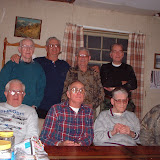
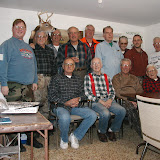
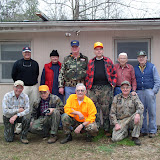
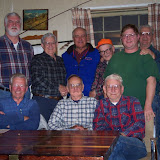
Thanks to everyone that helped out this weekend including Carl and George, Pleze, Joe, Jack, Vance, Ray, Dave, George Smith. Also stopping by to provide moral support were Mac, and later Levin.
We still need to finish the front with plywood and tar paper, put the shingles on the roof, and install the doors and siding.
I will post some photos later.
Rut is a three-letter word for deer hunting success
By Bill Cochran
Matt Knox won’t soon forget that morning he spent in a treestand the second week of last year’s muzzleloading deer season. By the time he climbed out of his stand at 10:30 a.m. he had seen eight different antlered bucks.
“They appeared to be everywhere, coursing the property like bird dogs looking for does. It was amazing,” said Knox, who is the deer biologist for the Department of Game and Inland Fisheries.
Hunters use one word to describe what was happening around Knox’s treestand. That word is “rut.”
You might say that “rut” is another three-letter word for sex in the life of a deer. It is a time of heightened sexual interest and without it there would be a whole lot fewer trophy deer killed each season. The rut can cause a buck to cast aside some of his survival instincts and take chances that he normally wouldn’t take. It is the clink in his armor.
Smart hunters plan their activities around the rut. So the question for many along about this time of the year is this: “When will the peak of the rut occur in 2006?”
When I received that question from reader Jason Hale, I relayed it to Knox.
“This one is easy,” he said. “We have been collecting reproductive data from across the state for several years and although the peak date of breeding varies a little from year to year, the average is always around mid-November.”
While the best time to go hunting during the deer season is anytime you can get away, be aware if you are looking for a buck the peak hunting is going to be Nov. 11-17 of the muzzleloading season and Nov. 18-25 of the general firearms seasons. Sure, big deer will be killed outside of those dates, but if you want proof about the impact of the rut just go to a big game trophy show and see how the trophy heads line up with the dates of the peak of the rut. I recall cataloging trophy deer that had been entered in a contest and an amazing number of them had been killed the same day.
There are many clubhouse theories on what jumpstarts the rut; cold temperatures, the moon phrase, the food supply among them. Most of it is what Knox calls “bunk.”
The rut is triggered by photo period, he said. The seasonal change of light affects the pituitary glands in bucks, which stimulates the release of testosterone, a male sex hormone produced in the testes.
There are some secondary factors involved. “Healthier deer with a more balanced sex ratio and an older buck age structure will have an earlier and more intense rut,” Knox said. This can explain some of the variance in the timing of the rut.
While outdoor magazine writers churn out lots of copy on the pre-rut, the rut and the post-rut, in reality most does are bred in a pretty short period and then the rut is over, he said.
When you are afield at the magical peak time, you can be rewarded with a parade of bucks like Knox observed last muzzleloading season. It is a show that you won’t want to miss.
Matt Knox won’t soon forget that morning he spent in a treestand the second week of last year’s muzzleloading deer season. By the time he climbed out of his stand at 10:30 a.m. he had seen eight different antlered bucks.
“They appeared to be everywhere, coursing the property like bird dogs looking for does. It was amazing,” said Knox, who is the deer biologist for the Department of Game and Inland Fisheries.
Hunters use one word to describe what was happening around Knox’s treestand. That word is “rut.”
You might say that “rut” is another three-letter word for sex in the life of a deer. It is a time of heightened sexual interest and without it there would be a whole lot fewer trophy deer killed each season. The rut can cause a buck to cast aside some of his survival instincts and take chances that he normally wouldn’t take. It is the clink in his armor.
Smart hunters plan their activities around the rut. So the question for many along about this time of the year is this: “When will the peak of the rut occur in 2006?”
When I received that question from reader Jason Hale, I relayed it to Knox.
“This one is easy,” he said. “We have been collecting reproductive data from across the state for several years and although the peak date of breeding varies a little from year to year, the average is always around mid-November.”
While the best time to go hunting during the deer season is anytime you can get away, be aware if you are looking for a buck the peak hunting is going to be Nov. 11-17 of the muzzleloading season and Nov. 18-25 of the general firearms seasons. Sure, big deer will be killed outside of those dates, but if you want proof about the impact of the rut just go to a big game trophy show and see how the trophy heads line up with the dates of the peak of the rut. I recall cataloging trophy deer that had been entered in a contest and an amazing number of them had been killed the same day.
There are many clubhouse theories on what jumpstarts the rut; cold temperatures, the moon phrase, the food supply among them. Most of it is what Knox calls “bunk.”
The rut is triggered by photo period, he said. The seasonal change of light affects the pituitary glands in bucks, which stimulates the release of testosterone, a male sex hormone produced in the testes.
There are some secondary factors involved. “Healthier deer with a more balanced sex ratio and an older buck age structure will have an earlier and more intense rut,” Knox said. This can explain some of the variance in the timing of the rut.
While outdoor magazine writers churn out lots of copy on the pre-rut, the rut and the post-rut, in reality most does are bred in a pretty short period and then the rut is over, he said.
When you are afield at the magical peak time, you can be rewarded with a parade of bucks like Knox observed last muzzleloading season. It is a show that you won’t want to miss.
Monday, September 04, 2006
Let's work on the cabin this weekend.

We really need to get it weather tight.
Roll call as of 9/8/06
Mac and Pleze will be up on Friday.
Jack, Vance, Dave, Levin, Joe, Carl are in.

John Bratch, Mike, Jimie and Don can't make it.
Thursday, August 24, 2006
Shipping Container for Storage

I checked with L and H Storage of Martinsburg, WV about a shipping container we could use for storage.
A 20 ft unit runs $1800 - $2500 depending on condition.
They have several now for $2000.
A 40 Ft unit runs $2000 - $3000 depending on condition.
They have several now for $2800.
Delivery to the cabin by rollback truck is $200.00
They need 13' 6" height and 8' 6" width clearance to get in.
A 20 ft unit should fit.
Sunday, August 20, 2006
Let's take a break.
Thank's to every one who came up and helped work on the cabin this weekend. We made a great deal of progress, but we still do not have it weather tight.
We will take a break next week end and give everyone a rest and time to heal up.
We will plan to return after labor day.
We will take a break next week end and give everyone a rest and time to heal up.
We will plan to return after labor day.
Carrying the banner for Sunday hunting
By Bill Cochran
Butch Ammon might as well have been carrying a sign that said “The End Is Near!” considering all the attention he was getting at the weekend Virginia Outdoor Sportsman Show.
The Richmond sportsman was wearing a t-shirt that he and his wife and daughter had designed. On the front was: “I Support Sunday Hunting. How About You?”
On the back was a list of things you can do on Sunday—fish, boat, Jet Ski, target shoot, play golf, tennis or baseball, go to football games, drink beer.” Then came the words, “But You Can Not Go Hunting.”
As Ammon moved through the record crowds at the Showplace in the Richmond area, most of the responses he received on the controversial issue of Sunday hunting were what he'd hoped to hear.
“A lot of people stopped me to talk to me and pat me on the back or give me a thumbs-up and basically make a ton of positive comments about Sunday hunting,” he said.
There were exceptions. When Ammon stood in line to buy a coke and hot dog a guy in back of him said, “You should be in church on Sunday.”
Said Ammon: “Yes, but we all should have a choice on whether or not we want to hunt on Sunday.”
That choice has been debated but shot down on a number of occasions during recent years, leaving Virginia one of seven states, all in the east, where most forms of hunting are ban on Sunday. Just this past General Assembly session, three bills that would have permitted at least partial Sunday hunting were killed.
But things appear to be changing:
>The governor says he favors an end to the ban.
>Several other states, including New York, Ohio and Michigan, recently have backed away from the prohibition of Sunday hunting with few apparent problems.
>There are national organizations, including the powerful NRA, who says people have a right to hunt on Sunday.
>The Virginia Department of Game and Inland Fisheries has recognized that the time has come to discuss Sunday hunting, a subject it mostly has avoided in the past. A committee of its board is scheduled to discuss the issue at a meeting 3 p.m. next Monday.
The board is facing some constituents who are demanding more hunting opportunities following a significant boost in license fees. DGIF admits that Sunday hunting would have little biological impact on wildlife. It is a social or cultural issue.
One major question, would it boost hunting license sales and attract newcomers and nonresidents to hunting in Virginia? Or would it cause problems for hunters from landowners and other outdoorsmen who welcome a day free of hunting?
Viewed as one of the major hurdles to Sunday hunting, along with DGIF and the General Assembly, is the Virginia Deer Hunters Association, the sponsor of the Virginia Outdoor Sportsman Show. And that's where Ammon and other advocates set up the past weekend.
Two groups were involved. Ammon was part of a group of deer hunters, mostly from the western end of the state, who rally around a Web site, www.vadeer.com . The other group, which had a booth at the show, was the Virginia Waterfowlers Association.
Both groups handed out “I support Sunday Hunting in Virginia” stickers. Vadeer.com stopped show visitors and asked them to take part in a poll. The reported result was 90 percent in favor of Sunday hunting.
Polls conducted by the Virginia Deer Hunters Association, as late as last year, have revealed that more than 60 percent of its members opposed Sunday hunting. Some sportsmen who advocate Sunday hunting say that the association has worded its question in a way that encourages a negative vote.
That is not the intent, said Denny Quaff, an association officer.
“I want to get a better feel for what people think,” he said.
With that in mind, he plans to expand the number of questions on Sunday hunting when the survey is circulated in the future. A hunter who would say “No” to Sunday hunting if only given that choice may say “Yes” to Sunday hunting that doesn't start until noon, he said.
When Ammon took his walking billboard to the booth of the Virginia Deer Hunters Association he said he met his stiffest opposition and was told that Sunday hunting would anger non-hunters and there are way more of them than hunters. The result could hurt hunting
This reveals that hunters themselves are sharply divided on the issue, and while it appears advocates of Sunday hunting are gaining ground they are a long way from victory.
Butch Ammon might as well have been carrying a sign that said “The End Is Near!” considering all the attention he was getting at the weekend Virginia Outdoor Sportsman Show.
The Richmond sportsman was wearing a t-shirt that he and his wife and daughter had designed. On the front was: “I Support Sunday Hunting. How About You?”
On the back was a list of things you can do on Sunday—fish, boat, Jet Ski, target shoot, play golf, tennis or baseball, go to football games, drink beer.” Then came the words, “But You Can Not Go Hunting.”
As Ammon moved through the record crowds at the Showplace in the Richmond area, most of the responses he received on the controversial issue of Sunday hunting were what he'd hoped to hear.
“A lot of people stopped me to talk to me and pat me on the back or give me a thumbs-up and basically make a ton of positive comments about Sunday hunting,” he said.
There were exceptions. When Ammon stood in line to buy a coke and hot dog a guy in back of him said, “You should be in church on Sunday.”
Said Ammon: “Yes, but we all should have a choice on whether or not we want to hunt on Sunday.”
That choice has been debated but shot down on a number of occasions during recent years, leaving Virginia one of seven states, all in the east, where most forms of hunting are ban on Sunday. Just this past General Assembly session, three bills that would have permitted at least partial Sunday hunting were killed.
But things appear to be changing:
>The governor says he favors an end to the ban.
>Several other states, including New York, Ohio and Michigan, recently have backed away from the prohibition of Sunday hunting with few apparent problems.
>There are national organizations, including the powerful NRA, who says people have a right to hunt on Sunday.
>The Virginia Department of Game and Inland Fisheries has recognized that the time has come to discuss Sunday hunting, a subject it mostly has avoided in the past. A committee of its board is scheduled to discuss the issue at a meeting 3 p.m. next Monday.
The board is facing some constituents who are demanding more hunting opportunities following a significant boost in license fees. DGIF admits that Sunday hunting would have little biological impact on wildlife. It is a social or cultural issue.
One major question, would it boost hunting license sales and attract newcomers and nonresidents to hunting in Virginia? Or would it cause problems for hunters from landowners and other outdoorsmen who welcome a day free of hunting?
Viewed as one of the major hurdles to Sunday hunting, along with DGIF and the General Assembly, is the Virginia Deer Hunters Association, the sponsor of the Virginia Outdoor Sportsman Show. And that's where Ammon and other advocates set up the past weekend.
Two groups were involved. Ammon was part of a group of deer hunters, mostly from the western end of the state, who rally around a Web site, www.vadeer.com . The other group, which had a booth at the show, was the Virginia Waterfowlers Association.
Both groups handed out “I support Sunday Hunting in Virginia” stickers. Vadeer.com stopped show visitors and asked them to take part in a poll. The reported result was 90 percent in favor of Sunday hunting.
Polls conducted by the Virginia Deer Hunters Association, as late as last year, have revealed that more than 60 percent of its members opposed Sunday hunting. Some sportsmen who advocate Sunday hunting say that the association has worded its question in a way that encourages a negative vote.
That is not the intent, said Denny Quaff, an association officer.
“I want to get a better feel for what people think,” he said.
With that in mind, he plans to expand the number of questions on Sunday hunting when the survey is circulated in the future. A hunter who would say “No” to Sunday hunting if only given that choice may say “Yes” to Sunday hunting that doesn't start until noon, he said.
When Ammon took his walking billboard to the booth of the Virginia Deer Hunters Association he said he met his stiffest opposition and was told that Sunday hunting would anger non-hunters and there are way more of them than hunters. The result could hurt hunting
This reveals that hunters themselves are sharply divided on the issue, and while it appears advocates of Sunday hunting are gaining ground they are a long way from victory.
Wednesday, August 16, 2006
Let's get the roof on this week!
Last weekend's work trip went well and we were really productive.
We got the walls to the cabin addition up, and partially sheathed.
Now, we need to get back and get the roof on before it rains.
Carl is going to get the materials and be at the cabin, ready to work this
Friday, August 18th.
Please come and lend a hand if you can on Friday and Saturday.
Let me know if you can come.
Dave
We got the walls to the cabin addition up, and partially sheathed.
Now, we need to get back and get the roof on before it rains.
Carl is going to get the materials and be at the cabin, ready to work this
Friday, August 18th.
Please come and lend a hand if you can on Friday and Saturday.
Let me know if you can come.
Dave
Tuesday, July 11, 2006
Cabin Crew

Thanks to every one that showed up for the work party. We made a lot of progress on the addition to the cabin. I guess I won't have to hire some illegals after all.
We are tentatively planning on the next work party the 2nd weekend in August, the 12th-13th. We plan on raising the walls that weekend.
Subscribe to:
Posts (Atom)